Are Christmas Trees in the Bible?

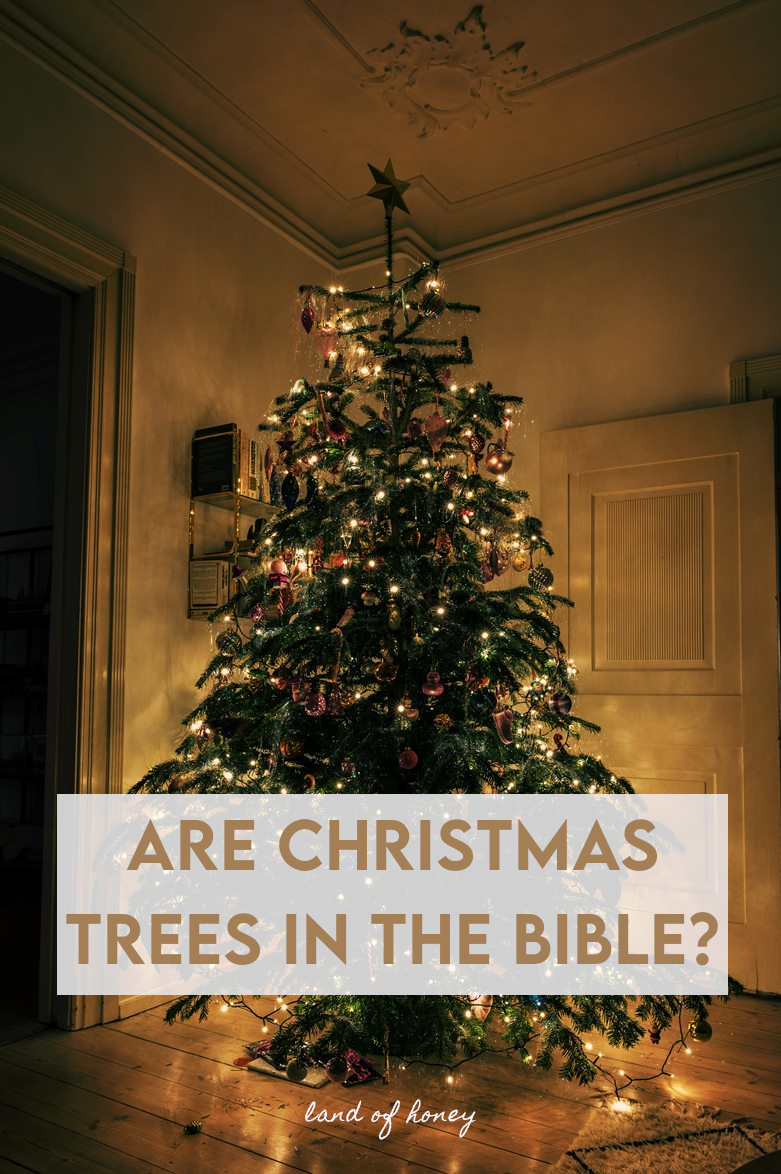
Picture of a large evergreen tree decorated with ornaments and warm white lights in a white room.


Are Christmas trees in the Bible? Even though most people believe Christmas is "in the Bible," most of its traditions and customs do not come from Scripture. You probably don't need me to tell you that stockings full of gifts, Santa Claus, candlelit services, Rudolph the Red-Nosed Reindeer, hanging mistletoe, and eggnog are not found anywhere in Scripture. But one popular Christmas tradition is found in the Bible.

Do you know what it is? The Christmas tree.

Now, it's not explicitly called that. The word 'Christmas' is never used in any book of the Bible - Old or New Testament. Many believers will be surprised to learn that Scripture never tells us to celebrate Christmas or even the birth of Jesus. But Jeremiah 10 does describe something familiar to all Christmas celebrations. The description sounds a lot like the brightly decorated evergreen trees that many Christians place in their homes in December.

Man carrying a cut pine tree to a red truck on a Christmas tree farm, captioned with the verse "Thus said YHWH, "Do not learn the way of the nations. the laws of these peoples are worthless, for one cuts a tree from the forest, work for the hands of a craftsman with a cutting tool. They beautify it with silver and gold, they strengthen it with nails and hammers so it doesn't topple." -Jeremiah 10:2-4

Where are Christmas trees in the Bible?

We can find reference to this in the writings of Jeremiah:

Thus said YHWH, "Do not learn the way of the nations, and do not be awed by the signs of the heavens, for the nations are awed by them. For the laws of these peoples are worthless, for one cuts a tree from the forest, work for the hands of a craftsman with a cutting tool. They beautify it with silver and gold, they strengthen it with nails and hammers so it doesn't topple." -Jeremiah 10:2-4

They cut a tree...they decorate it...and they secure it so it doesn't fall over. Doesn't that sound very much like a traditional Christmas tree to you?

We should note that Jeremiah is quoting the Living God himself here. These are YHWH's words, and they start with, "Do not."

Why does the Bible say not to cut trees down and bring them into our homes? Are Christmas trees bad?

In Scripture trees are often connected to worship of other gods. Deuteronomy 16:21 says that no kind of tree is to be planted beside the altar of YHWH. Jeremiah 3:9 says that the house of Israel committed adultery "with stones and trees." Several passages of Scripture warn of idols made of trees. And a common phrase connected with idolatry throughout the Bible is that it occurred under "every green tree." And then of course the original sin of Adam and Eve in the garden had to do with them refusing to honor instructions related to a tree.

Yes, trees were made by the Creator and have many positive references in the Bible. And no, I certainly don't think that all trees are bad somehow. But the connection between trees and sin and idolatry gives me pause, especially when there is the verse in Jeremiah that strongly correlates to the Christmas trees we see in so many churches and households.

the original sin of Adam and Eve in the garden had to do with them refusing to honor instructions related to a tree.

Now many people will tell you that the tree in Jeremiah 10 is not a Christmas tree. They believe it's fine to cut a tree down and decorate it since they aren't worshiping that. But this passage of Scripture says not to learn this way because it is "worthless." What does it mean if we are taking Luke 2 (the story of the Messiah's birth) and mixing it with something the Living God calls worthless? Is that watering down the message of the Gospel? Is that confusing people who read the Bible and see how it contradicts with popular Christian theology and lifestyles? 

Scripture tells us in the golden calf story that the people involved meant that as a way to worship YHWH (Exodus 32:5), but YHWH himself still called the calf an idol in Exodus 32:8. Even if he hadn't done so, I think most of us would still refrain putting any sort of golden calf or cow statues in our home - even if we didn't intend to worship it. In the same way, it makes sense for believers to honor this Biblical admonish "not to learn" the way of those who cut a tree down and take it inside and decorate it.

many people will tell you that the tree in Jeremiah 10 is not a Christmas tree. They believe it's fine to cut a tree down and decorate it since they aren't worshiping that. But this passage of Scripture says not to learn this way because it is "worthless." What does  it mean if we are taking Luke 2 and mixing it with something the Living God calls worthless?


Related posts:
Five Things Every Believer Should Know About Christmas
The Christmas Question Documentary Interview with Kayte Abaffy
Why I Stopped Celebrating Christmas

Here's When the Biblical Holidays Happen in 2023

Here's when the Biblical holidays happen in 2023 - image is a planner open on a table with a woman's hand turning the pages | Land of Honey


This is when the Biblical holidays happen in 2023.

What are the Bible holidays? Passover, Unleavened Bread, First Fruits, Shavuot, the Feast of Trumpets, Yom Kippur, and the Feast of Tabernacles are all days we are told to observe and celebrate in Scripture. They are listed in Leviticus 23, Deuteronomy 16, and elaborated on elsewhere in Scripture. Each of these has historic and prophetic significance for Bible believers!

The Bible gives specific dates for each holiday, but since the Gregorian calendar doesn't match up with the Creator's calendar the dates land a little bit differently each year on our modern calendar. There are also a few different ways to calculate the start of the year and because of that some groups will observe them at slightly different times. What I'm sharing here is the most commonly used set of dates. Whether you go by this calendar or another, mark your calendars for these set apart times!

When do the Biblical holidays happen in 2023?

Passover - April 5-6

Unleavened Bread - April 6-13

First Fruits - April 8-9

Shavuot - May 25-27

Feast of Trumpets - September 15-17

Yom Kippur - September 24-25

Feast of Tabernacles - September 29 - October 7

A couple of things about this: according to this calendar, days start in the evening at sundown. This means that Passover starts on the evening of April 5 and goes through the evening of the 6th. This calendar also gives an extra day to both the Feast of Trumpets and Shavuot, even though in the Bible they are both just one day events.

It's also important to note that while all of these are special times, some of these are also considered Sabbath days which means we shouldn't work on them. These Sabbath days are the first and last days of Unleavened Bread, Shavuot, the Feast of Trumpets, Yom Kippur, and the first and last days of Tabernacles.

Bible Holiday Dates for 2023 - Passover - April 5-6  Unleavened Bread - April 6-13  First Fruits - April 8-9  Shavuot - May 25-27  Feast of Trumpets - September 15-17  Yom Kippur - September 24-25  Feast of Tabernacles - September 29 - October 7


More on the Biblical holidays:
Why I Started Celebrating the Biblical Feasts
Why the Biblical Holidays are for All Believers
The Beginner's Guide to the Biblical Holidays

Biblically Clean Breakfast Ideas

Biblically Clean Breakfast Ideas and Recipes | Land of Honey


When transitioning to Biblically clean eating many people have shared that breakfast is where they struggle. When you're used to eating bacon, sausage, or other unclean meat it can be hard to figure out what to eat instead. I'm sharing ideas for Biblically clean breakfasts, but please keep in mind that you certainly don't have to whip one of these up everyday. You can of course make your own versions or eat cereal, peanut butter toast, a cup of yogurt, a piece of fruit, or other hassle free foods for breakfast. These recipes are great and I would recommend trying them, but use this as a starting point for what you can make or order for breakfast, not a conclusive list. Many of these recipes would also work well for dinner or a snack.

Oven Hash Browns - Biblically clean recipes for breakfast and brunch | Land of Honey

Photo is a white plate of blueberry pancakes, a person's hand is holding a fork and cutting into them

Peanut Butter Overnight Oats and other easy Biblically clean recipes for breakfast and brunch | Land of Honey

Photo is off two egg muffins topped with avocados with strawberries on the side, on a plate
Breakfast Vegetable Scrambled Eggs - Biblically clean egg recipes for breakfast, brunch, and dinner | Land of Honey


Healthy Granola and other Biblically clean breakfast and brunch recipes | Land of Honey


Easy Strawberry Shortcake Yogurt Granola Bowls - biblically clean breakfast and brunch recipes | Land of Honey


Photo features a stack of golden-brown French toast, topped with a dollop of plain yogurt, blueberries, and raspberries with maple syrup on a while plate
Shot of a woman's hands holding a white pan of enchiladas, topped with melted cheese and chopped green herbs

Smoked Salmon Bagel - Biblically clean recipes for breakfast | Land of Honey

5 Minute Pesto Arugula Breakfast Sandwich - Biblically clean egg and breakfast recipes | Land of Honey


Healthy Make Ahead Breakfast Casserole from Cookie and Kate
Healthy Breakfast Casserole - Biblically clean recipe ideas for breakfast and brunch - make ahead and easy | Land of Honey


Summer Breakfast Tacos - Biblically clean breakfast ideas | Land of Honey

Scrambled Egg and Asparagus Toast - breakfast and brunch recipes that are Biblically clean | Land of Honey

Homemade waffles and other Biblically clean breakfast and brunch recipes to try | Land of Honey


Please remember that these recipes are intended to give you an idea of Biblically clean breakfast and brunch options. You don't have to make these exact recipes or cook all of these things from scratch in order for it to follow Biblical guidelines. There are plenty of store and restaurant versions that work as well!

Photo is a collage of various breakfast dishes - eggs and hashbrowns, blueberry pancakes, smoked salmon bagel, granola, and baked oatmeal - text reads Biblically clean recipes for breakfast and brunch


Did the Messiah Fulfill the Law? Understanding Matthew 5:17

Did the Messiah Fulfill the Law? Understanding Matthew 5:17 | Land of Honey

Did the Messiah fulfill the law? That's a phrase most of us have heard dozens of times...and with good reason. The Bible says the Messiah came to fulfill the law; this was said by Jesus himself in Matthew 5:17. But it's important to get the implications of that statement correct.

What does the Messiah fulfilled the law mean?

Contrary to popular belief, fulfilling the law doesn't mean getting rid of the law or "doing away with" Biblical law. Many Christians throw the statement, "The Messiah fulfilled the law," at nearly any suggestion of keeping Biblical commandments to mean that since the Messiah did this, we don't need to worry about it anymore. This is usually said to explain why many believers choose to disregard or not honor certain instructions from Scripture. Christianity teaches that the Messiah 'fulfilled' the law by keeping it perfectly, thereby setting us 'free' from some (albeit not all, in Christian thinking) of the commandments. The foundation for this argument is flawed, as much Christian doctrine teaches that the Messiah actually violated the law. This is, of course, not true! You can see posts like this one for more information on that but the takeaway is that Yahusha never broke any of the commandments. If he had, he would have been a sinner (Scripture defines sinning as breaking Biblical commandments), and he would have been disqualified from being our Savior.

But if you look up the word fulfill in any dictionary you will find a different definition than getting rid of something. The first definition is usually given as something like, "to bring into actuality," or "to bring into effect," or "to do something." To me that sounds like the opposite of doing away with something! 

Look at the Messiah's words when we understand this word properly:

"Do not think I have come to abolish the law or the Prophets; I have not come to abolish them but to bring them into effect." -Matthew 5:17

or

"I did not come to abolish the law but to do it."

"Do not think I have come to abolish the law or the Prophets; I have not come to abolish them but to bring them into effect." -Matthew 5:17 | Land of Honey


What law did the Messiah fulfill?

It's important to know exactly which law the Messiah was bringing into effect. A lot of people will tell you the Messiah actually taught some sort of New Testament law or His own version of Biblical law, but the context of the law and the Prophets doesn't support this idea. Plus at the time of this statement there was no New Testament. Since He only did what He saw His Father doing, and given the context of the law and the Prophets, the Messiah was referencing the commandments given in the Old Testament.

There are three types of laws in the Bible. Biblical, Levitical, and Jewish.

He's not bringing into effect Jewish laws that are manmade. He spent much of His ministry confronting religious leaders about upholding their own traditions and teachings in place of what Scripture says, so it would make no sense that He would be bringing those into effect.

That leaves us with Biblical law and Levitical law. Since Psalm 110 tells us the Messiah's priesthood is of Melchizedek, and we know that He cannot function as a Levitical priest since He is of the tribe of Judah, it wouldn't make any sense to say that His focus was on Levitical law and cracking down on the standards for animal sacrifice, etc.

That leaves us with Biblical law. These are the laws found in the Old Testament (mostly in Genesis, Exodus, Leviticus, Numbers, and Deuteronomy - also known as the Torah), that give us clear instructions for our behavior. Most of Biblical law relates to how we worship YHWH, how we treat others, regulations for loans and business conduct, instructions for sexual conduct, animals we are not to eat, and instructions for Biblical holidays, including the Sabbath.

Learn more about Biblical law here.

What Does the Messiah Fulfill the Law Mean? Understanding Matthew 5:17 | Land of Honey


But didn't the Messiah keep the law perfectly so we don't have to anymore?

The Messiah did keep the law perfectly. But the Bible never says that because He did, we don't have to.

Depending on where you live in the world you are subject to specific laws. These encompass everything from driving rules to tax law to workplace regulations to laws against theft. As a citizen, or even a passing visitor, you are expected to keep all of them. Let's say that my dad has flawlessly kept the laws of our state and country for his entire life...having never evaded his taxes, committed a crime, ran a stop sign, etc. Does that mean that because he has perfectly kept these laws, then I don't have to? Of course not! It would be completely absurd for me to commit a crime and tell the police officer, "It's okay for me to do this because my dad has never broken the law."

And what would the police officer think if I used that as an argument? Something like, "If your dad set such a great example, why aren't you more like him? Why aren't you following the same rules?"

Now if I were to get in legal trouble, my dad would be gracious enough to help. If I was given a speeding ticket, he would pay it for me if I couldn't. But just because someone has taken care of my debt doesn't mean it would be wise for me to go out and break traffic laws - why put myself and others at risk from reckless choices? But his actions don't mean the law does not apply to me. Since we all have a spiritual debt we cannot pay, the Messiah lovingly and graciously covered that debt for us with his own life. 

Yes, the Messiah kept the law perfectly. He didn't break even the least significant instruction of Scripture. But that doesn't make it okay for us to disregard how He lived. And 1 John 2:6 tells us that if we claim to know Him, we need to walk as He did.

The Messiah kept the law perfectly. But the Bible never says that because He did we are free to disregard scripture's commandments. 1 john 2:6 tells us that if we claim to know him, we need to walk as he did.

What does Matthew 5:17 mean then?

This passage of Scripture does say that the Messiah came to fulfill the law, but we can see that fulfill doesn't mean "do away with," but rather "to do" or to "bring into effect"! If the meaning of the word fulfill isn't convincing enough, we should also note in this same verse Yahusha says without ambiguity, "Do not think I have come to abolish the law or the Prophets; I have not come to abolish them." The Messiah literally said that He did not come to do away with the the commandments! 

This understanding of Matthew 5 fits with the rest of the Messiah's life and the Gospels. We consistently see Him keeping the commandments and defending Biblical law to the religious leaders who were more concerned with their own traditions. He came to show us the way to live, and said He wasn't abolishing Biblical law.

The Messiah fulfilled the law by keeping it, and by keeping it He set the example for how we are to live.

Matthew 5:17 says that the Messiah came to fulfill the law, but fulfill doesn't mean "do away with," but rather "to do" or to "bring into effect"!


Related posts:
Did the Messiah Break the Law?
Basics of Biblical Law
Commandments or Traditions - Understanding the New Testament

Upcoming Biblical Holiday Dates 2026

Here's When the Biblical Holidays Happen in 2026

This is when the Biblical holidays happen in 2026. If you're looking for next year's dates for Passover, Unleavened Bread, First Fru...